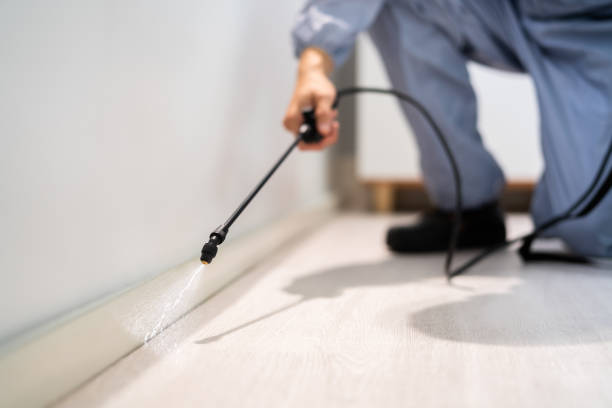
Mud tubes on the foundation or frass near window sills both mean the same thing — termites are actively feeding, and every week matters. Homeowners insurance almost never covers termite damage, which makes early detection the only real financial protection you have.


Our inspectors hold state wood-destroying organism (WDO) licensing and produce documentation accepted for real estate transactions.
Swarms or mud tubes get priority scheduling — we know active subterranean colonies cause damage every day they go untreated.
Treatment quotes are based on measured foundation perimeter and infestation type, given to you in writing before work begins.
We install non-repellent liquid termiticide barriers and in-ground bait stations, backed by moisture meters and acoustic detection tools. Beyond the treatment itself, you'll get a documented moisture assessment, since damp foundation zones are usually the first areas termites return to.
Non-repellent liquid termiticide applied along the foundation perimeter, engineered to eliminate the colony through contact transfer.
Monitoring stations placed at intervals around the structure, checked on a schedule to intercept colonies before they reach the building.
Localized injection and, when needed, structural fumigation for drywood termites living inside wood members rather than the soil.
Licensed inspection documentation formatted to lender and closing requirements, delivered within the timeline your transaction needs.
Beyond treatment, we assess joist, sill plate, and subfloor damage so you know the full scope before repairs begin.
We treat soil and foundation footings pre-pour so new builds start with a termite barrier already in place. Every crew also carries backup moisture meters, since accurate readings are what separate a real diagnosis from a guess.

Tell us what you're seeing — mud tubes, swarmers, frass, or damaged wood — so we schedule the right inspector and equipment.
We show up equipped to inspect thoroughly, not just visually scan — moisture readings catch what the eye misses.
You get a complete inspection record, including photos of mud tubes, damage, or conducive conditions found on-site.
Treatment is scheduled with a written warranty period, and we outline the monitoring schedule if bait stations are installed.
Found mud tubes behind our water heater during a routine check. Inspector caught it before it reached the framing.
Needed a WDO report fast for a closing deadline. Report was in my inbox the same day as the inspection.
Bait stations have been checked every quarter for two years now, exactly as scheduled. No surprises.
They found drywood termites in a rafter we never would have checked. Saved us from a much bigger repair later.
Refinancing required a current WDO report and ours had expired. They got an inspector out within two days to meet the lender deadline.

Licensed inspectors cover Payette and the wider Payette, ID region, with scheduling priority given to properties showing active swarms, mud tubes, or real estate transaction deadlines. We factor in soil conditions and tree cover across Payette when scheduling routine versus priority termite inspections.

Subterranean termites live in soil and travel via mud tubes into structures; drywood termites live entirely inside wood, requiring no soil contact.
Pricing is based on linear feet of foundation and treatment type — we provide an exact written quote after inspection, not a phone estimate.
Most lenders and many state real estate transactions require a current WDO inspection report — we can turn documentation around on your closing timeline.
Non-repellent liquid barriers typically carry a multi-year warranty period, with annual re-inspection recommended.
DIY treatments often scatter the colony instead of eliminating it, which complicates professional treatment down the line.
Swarmers are reproductive termites leaving a mature colony to start new ones — seeing a swarm usually means an established colony is nearby. It's also worth scheduling an annual re-inspection even after treatment, since new conducive conditions like grading changes can develop over time.
A documented inspection today is cheaper than structural repair later — call to get on the schedule.
Call +1-844-564-2570